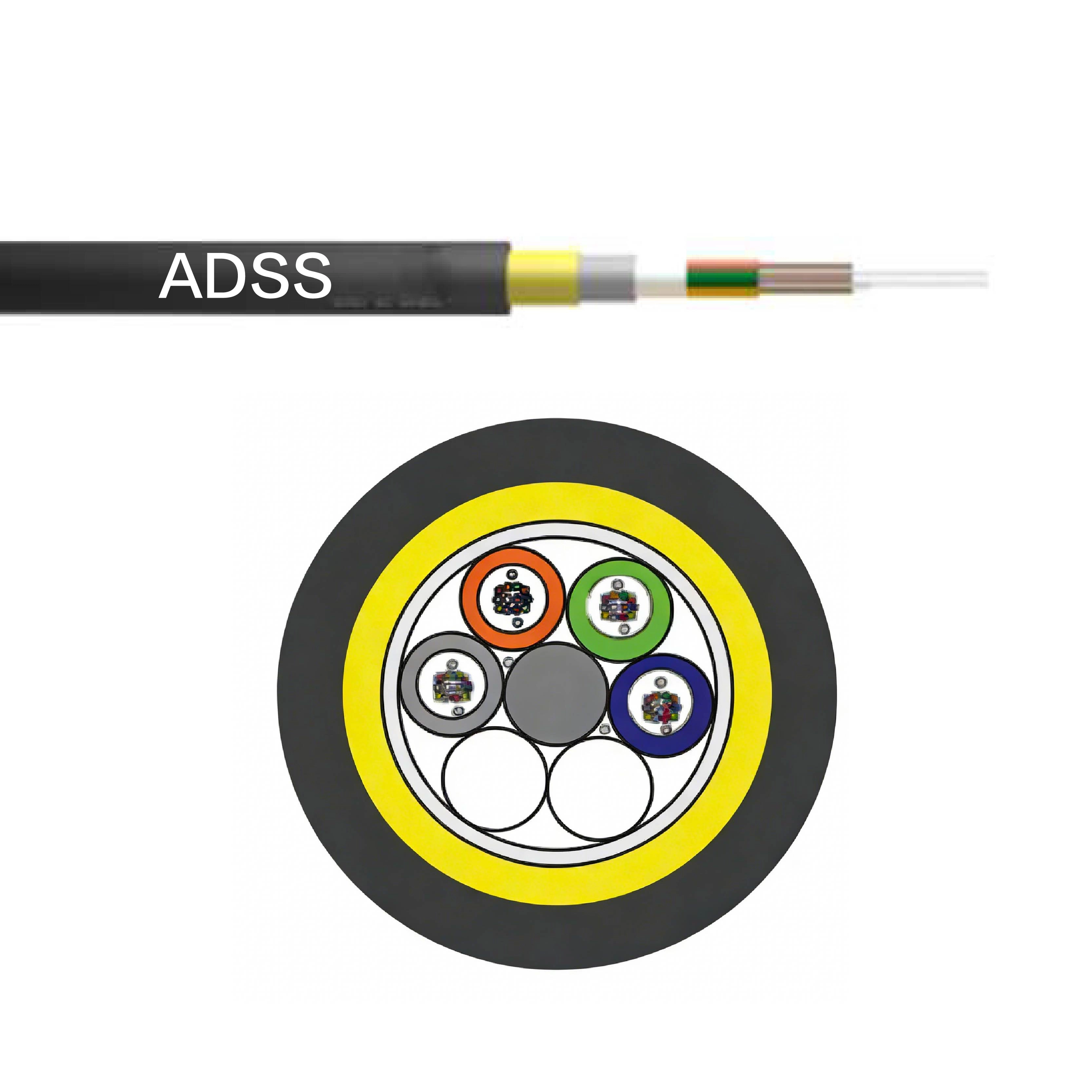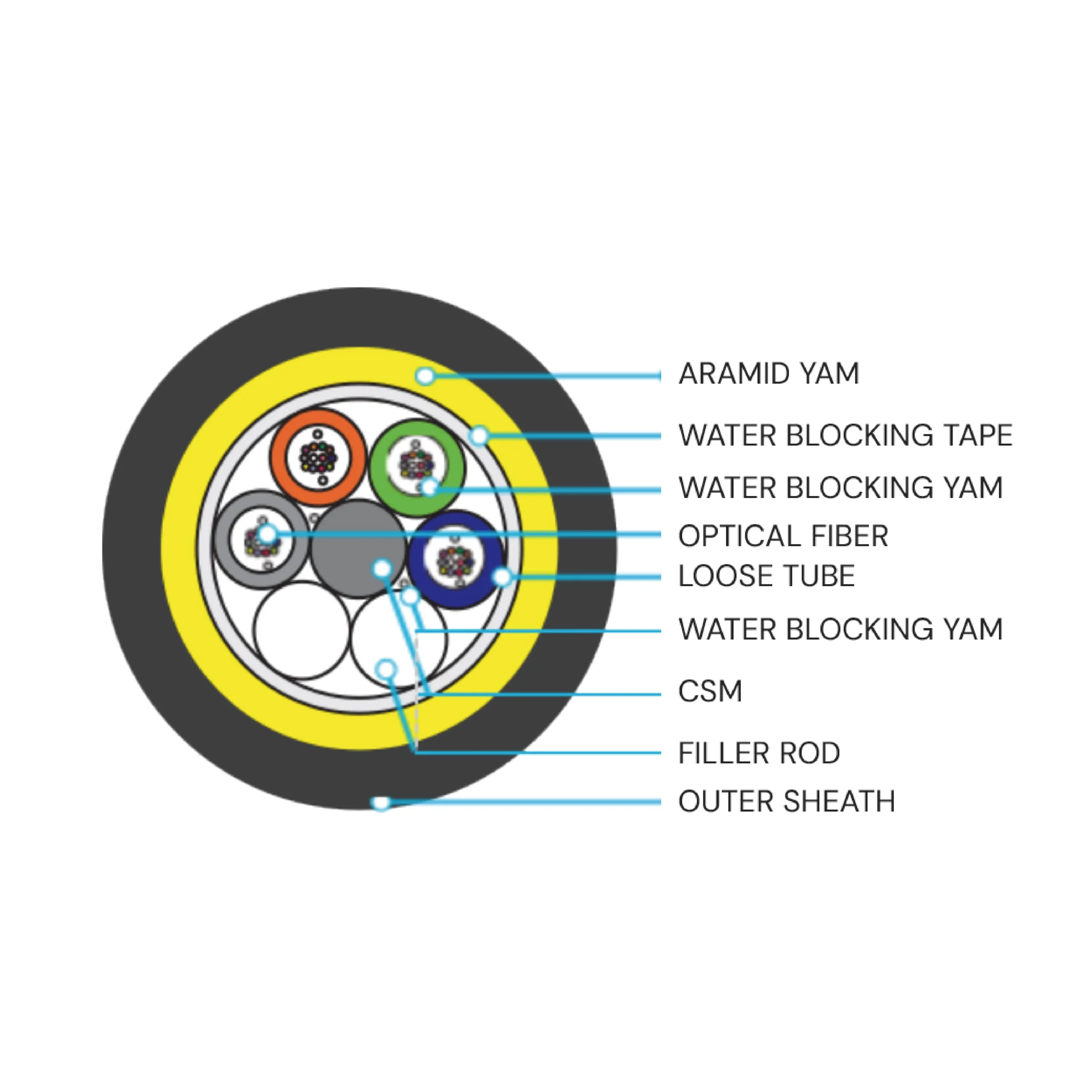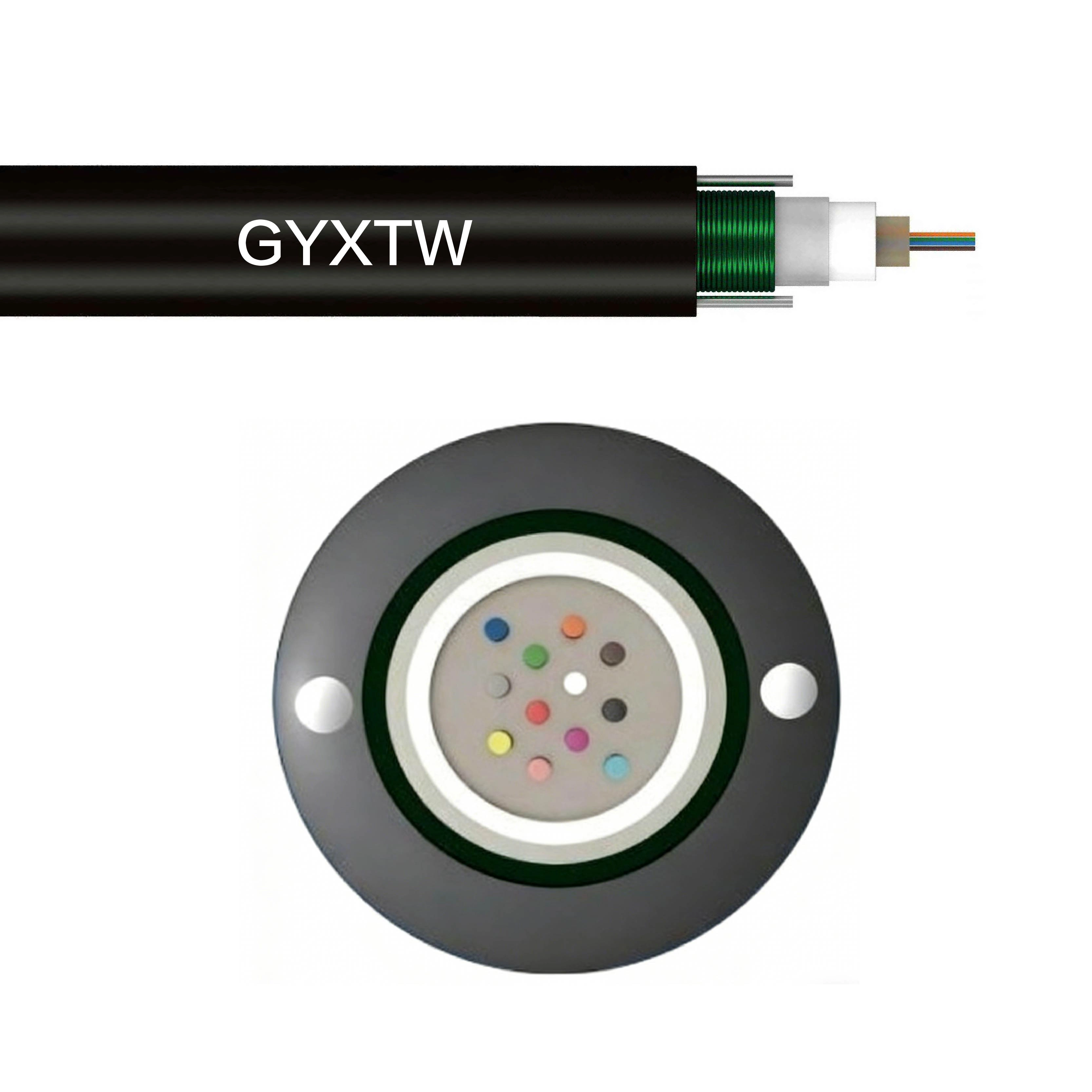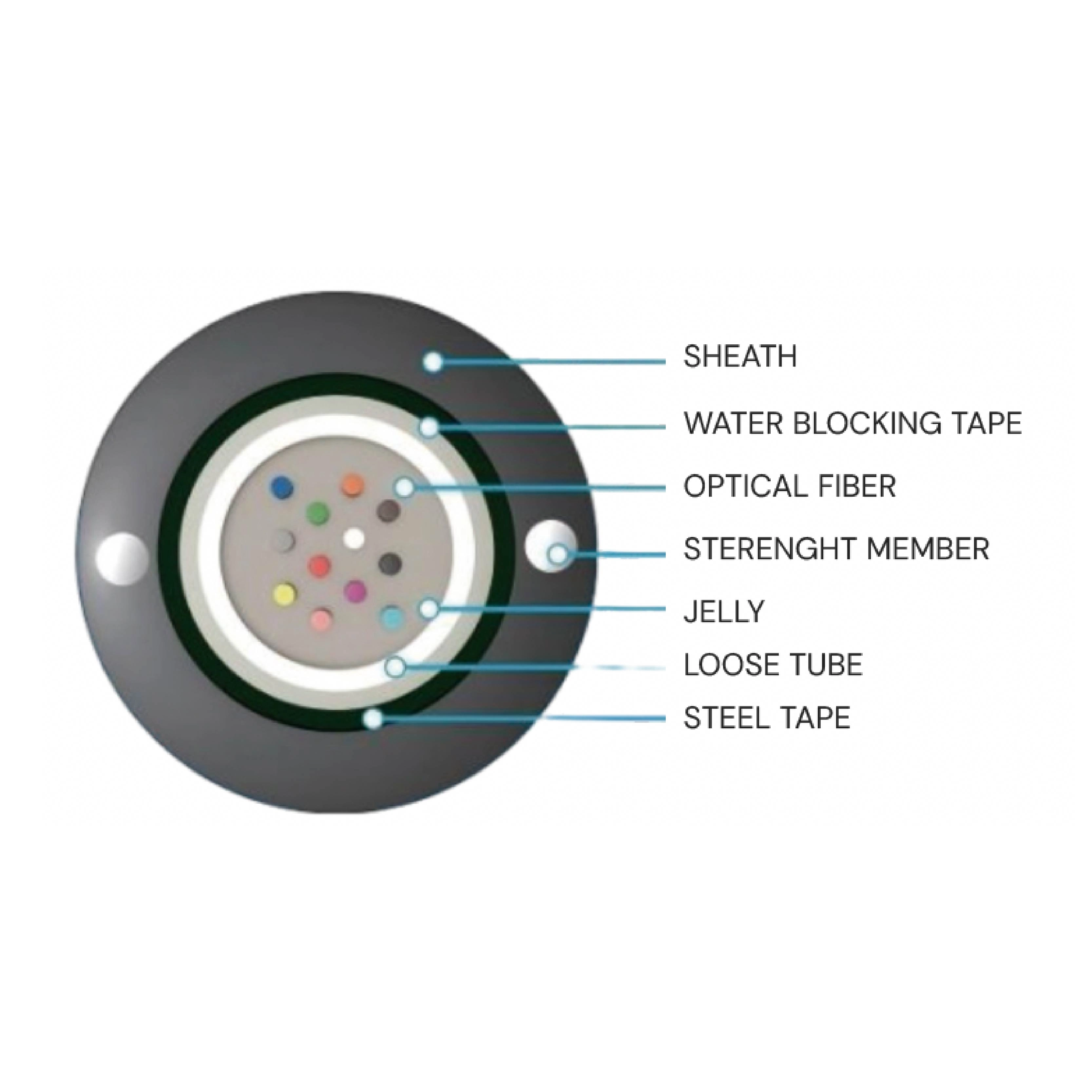

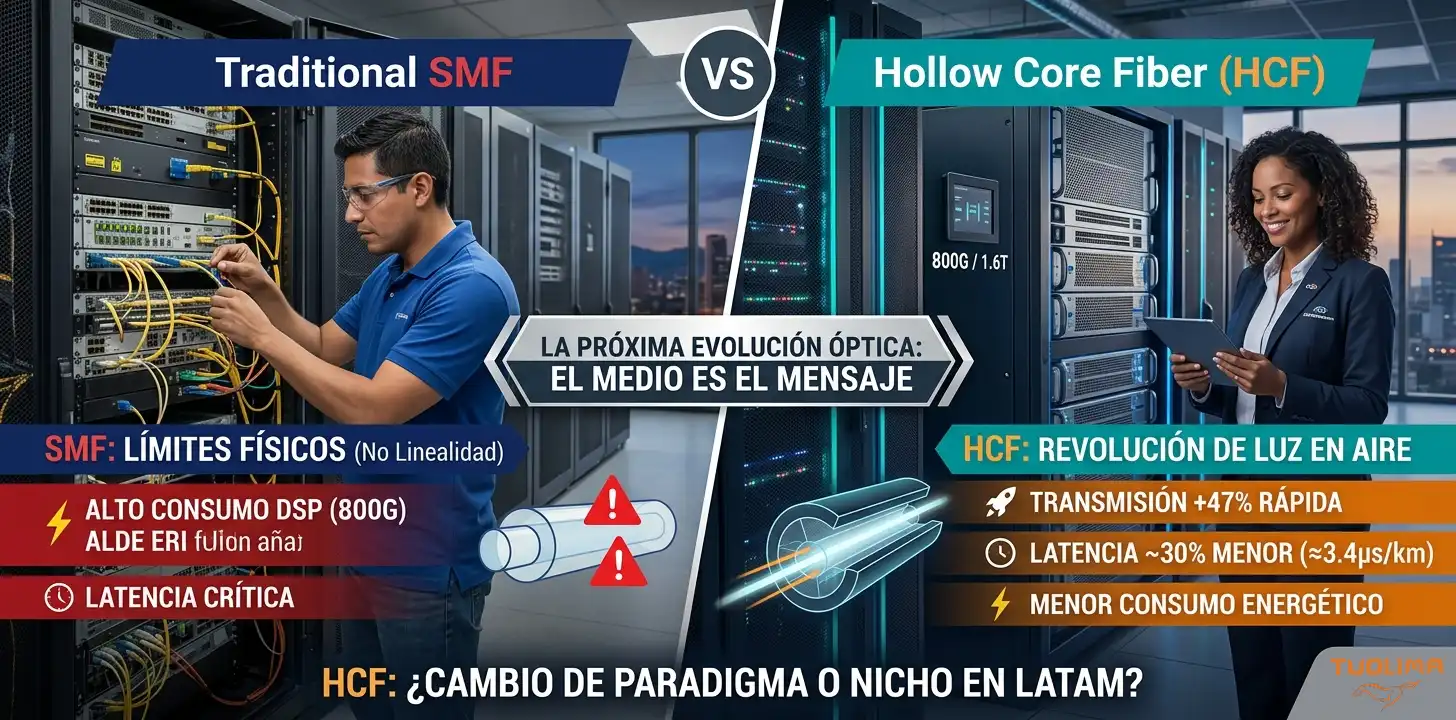
As data center networks push toward 800G and 1.6T transmission, traditional single-mode fiber (SMF) is approaching its physical limits.
At the recent HCF seminar hosted by CIOE and C114, one message became clear:
The next leap in optical networking may not come from better DSP—but from a new transmission medium.
Hollow Core Fiber (HCF) is emerging as that candidate.
Why Traditional Fiber is Reaching Its Limits
For decades, SMF has been the backbone of global communications, with over 6.5 billion kilometers deployed worldwide.
However, engineers now face:
- Shannon limit constraints
- Severe nonlinear effects
- Increasing DSP and FEC power consumption
In high-performance environments like AI clusters and DCI, latency and signal degradation are becoming critical bottlenecks.
What Makes Hollow Core Fiber Different?
Unlike conventional fibers where light travels through glass, HCF guides light through air.
This fundamental shift delivers measurable advantages:
- Up to 47% faster transmission speed
- Latency reduced by over 30% (~3.4 µs/km)
- Ultra-low attenuation (~0.04 dB/km)
Nonlinearity reduced by 3–4 orders of magnitude
For engineers, this means:
- Higher Signal-to-Noise Ratio (SNR)
- Reduced reliance on complex DSP
- Potential to use lighter FEC schemes
- Lower power consumption in high-speed modules
Key Application Scenarios: Where HCF Makes Business Sense First
While HCF has potential in long-haul and submarine networks, its fastest commercial adoption will likely be in:
1. AI Data Center Networks (DCN)
GPU clusters require ultra-low latency
Even microseconds impact synchronization efficiency
2. Data Center Interconnect (DCI)
Short-distance, high-bandwidth links
High tolerance for premium infrastructure cost
Early deployments by hyperscalers already indicate strong momentum.
Engineering Reality: The Gap Between Lab and Deployment
Despite impressive lab results, HCF still faces major engineering challenges:
1. Extremely High Cost
~30,000 RMB/km vs ~30 RMB/km for standard SMF
~1000x cost gap
2. Splicing Challenges
HCF-HCF splice loss: 0.1–1.5 dB
HCF-SMF splice loss: 0.2–3 dB
Highly sensitive to bending (10x traditional fiber)
3. Lack of Testing Standards
Traditional OTDR tools are not compatible
No unified standards for:
Wideband measurement
Mode skew analysis
4. Environmental Sensitivity
Microstructure prone to moisture ingress
Requires advanced sealing and protection
The Road Ahead: From Niche to Mainstream
The path forward is clear:
- Manufacturing optimization → reduce cost
- Splicing & connector ecosystem development
- Customized transceivers and testing tools
- Adoption in high-value scenarios first
HCF is not just a new fiber—it requires a full ecosystem upgrade.
What This Means for Fiber Infrastructure Providers
For manufacturers and solution providers, this shift creates new opportunities:
Advanced fiber cable design for emerging architectures
Integration with high-speed optical modules
New testing and deployment solutions
Companies that prepare early will be positioned to serve the next-generation optical infrastructure market.
FAQ
1. What is Hollow Core Fiber (HCF)?
HCF is a type of optical fiber where light propagates through air instead of glass, reducing latency and nonlinear effects.
2. Why is HCF important for AI data centers?
Because it significantly reduces latency and improves signal quality, which is critical for GPU synchronization and high-speed data processing.
3. What are the main challenges of deploying HCF?
High cost, difficult splicing, lack of testing standards, and environmental sensitivity are the main barriers today.